


When it will rise again
- Charlie Bonner
- Jun 19, 2018
- 7 min read
Detroit, Michigan Playlist: Eminem, Calling everyone in my contacts list
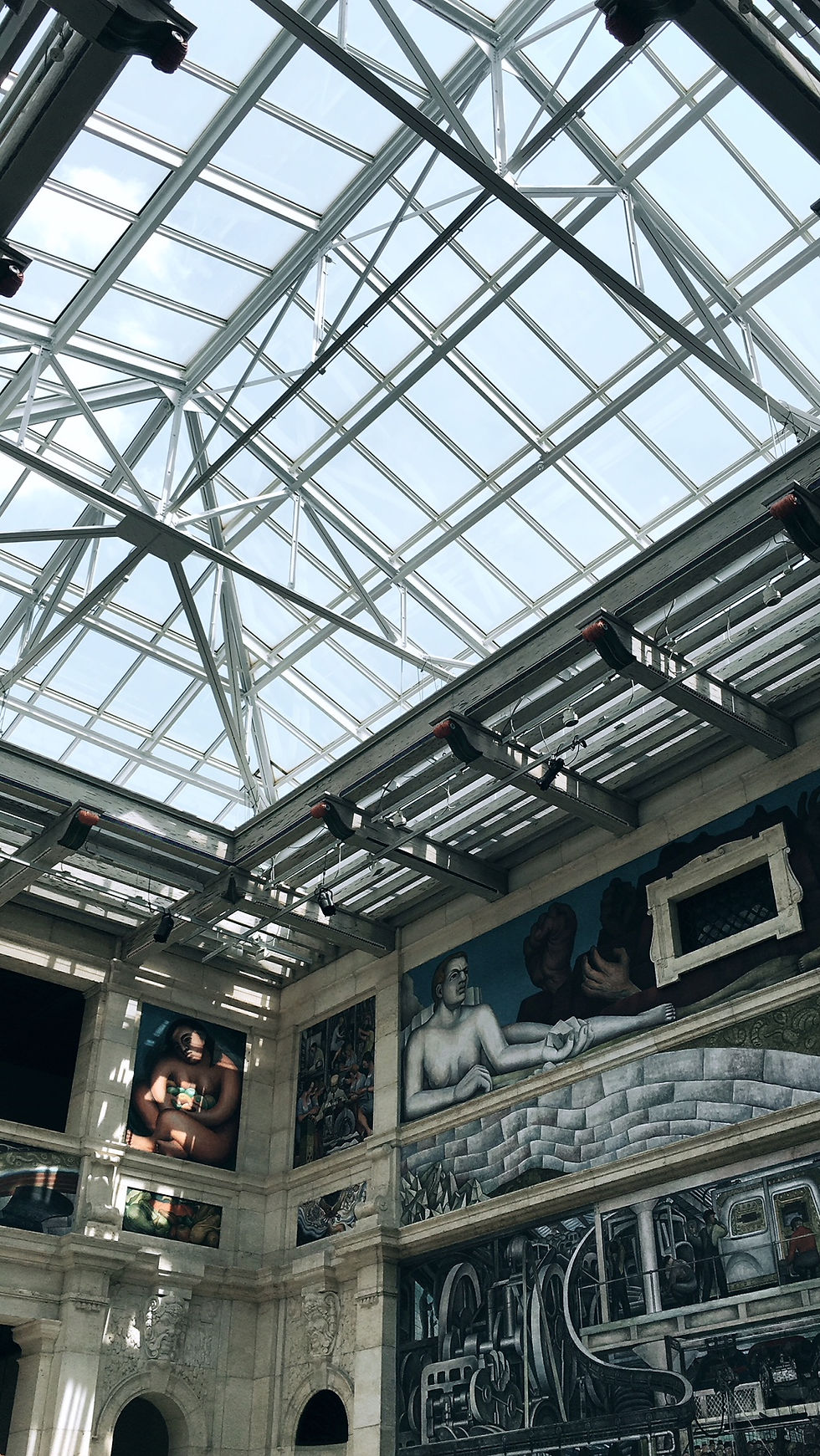
For general tourism purposes, tour companies should probably stop hiring social justice warriors to be their guides—but for our purposes, they provide quite the insight. Today’s guide for the free walking tour of downtown Detroit looks more like a character from Portlandia than an actual person. He wears a floral Pistons hat, with a long earing that hangs next to a single curl of hair left long on his shaved head. He wears green cut-off jean shorts. His hands are dirty, which I find out is a result of his picking flowers as he walks, offering horticultural tips as a bonus attraction on the walking tour. The downtown of Detroit is a relic of the days when the American automobile industry was so prosperous it could line the interior of the city's buildings with gold. The art deco architecture is truly breathtaking, but sort of ominous when you think about what became of Detroit. These buildings are the backdrop to mass poverty and crime; these buildings are a thinly gilded vision of the city. We stare up at a gorgeous old theater in disrepair; I was shocked when he said it was being demolished this year. The tour guide explains, “many of these buildings actually lack historical protection because the city is a little busy making sure the police come in less than an hour.” He says this very non-chillingly, like ‘here’s a Shepard Fairy Mural, here’s cheesecake factory on the left, here on the right we have a police response rate of more than an hour.” Is this just the status quo in a city we left behind? To a certain extent, it is this sort of thing that people on this tour are looking for. Why do people come to Detroit these days? To see the American decay to which the President so often refers, a city marked by the tragedy on mass unemployment, a city that’s still trying to claw its way out. We travel across the country to see what that looks like in person. He rants about gentrification, about taxpayer funding for sports complexes, about the failure of the Detroit renaissance so many were promised.


Our tour pauses in a small park that used to house the state’s capital, “this used to be where artists and senior citizens once lived, now it has dog boutiques,” he notes. He tells the story of the seniors being kicked out in place of upscale condos, how this became a part of the tour, I am unsure, but it’s fascinating to see. He explains that the low-income housing in this area is greatly skewed, “the Median income in Detroit is $25,000 but regionally it’s $50,000, they expanded to using the regional number to push more low-income people out of the city.” My fellow tourists nod and point their cameras to the former senior living facility. What kind of fucking scrapbook are these people making? Later in the day, I tour The Heidelberg Project as the sun is beginning to set. As it is described, the idea for this space started under “the belief that all citizens, from all cultures, have the right to grow and flourish in their communities. The HP believes that a community can redevelop and sustain itself, from the inside out, by embracing its diverse cultures and artistic attributes as the essential building blocks for a fulfilling and economically viable way of life.” It’s an aging old Detroit neighborhood that has come to life through the work of this singular artist, with bold color and imagination painted across the homes of the two city blocks the artist owns. A community still exists here, the houses that are a part of the piece are inhabited by families who have lived there for generations. They watch from their porches as tourists come to photograph the splendor the place they call home. I learn that many of the original houses that were part of the project were set aflame years ago and there is still a void where those homes existed. The ‘trash-art’ is remarkable and deeply unsettling. It is almost the antithesis to Detroit’s downtown where the art is now enveloped in trash; here the trash becomes art. Both are unsettling, both captivating, both a product of the city they inhabit.

My hostel is full of women visiting the town for a grassroots organizing conference, they are from Chicago and are part of a childcare collective that provides low-cost childcare to activists and organizers. Their work allows more moms and families to be involved in activism, bringing diverse new voices into the political process in Chicago. Childcare being a hindrance to political participation is an issue that I have never given that much thought to, but it makes sense. How can we expect diverse perspectives in activism if we're not consciously thinking about what is keeping folks from the table? I’m filling this back in the expanding folder of things we all need to work on when I get home. I think of them as I hear gun shots while I lie in my bunk that night. No one else seems to panic so I just continue to lie there and stare out the window not wanting to be that out of towner guy who's not accustomed to hearing gun shots at night. The shadow of a recently burned down House next door is looking especially ominous now.
I spend the next morning in Eastern Market watching as artists sell their wares and food trucks pump out local cuisine. Many stalls feature bold batik patterns or t-shirts that read “I’m not afraid of Detroit.” I can’t imagine living in a city that so many people are afraid that you have to start a t-shirt campaign about it. I talk with a local bankruptcy attorney who’s waiting on the beignets she ordered from a parked food truck in the middle of the market. “I don’t see much democracy happening right now,” she tells me. She uses as example the issue of human trafficking, noting that Detroit has some of the highest instances of children being trafficked anywhere in the country and, “we prosecute them instead of help them,” she notes. It is a failure of the government and the people speaking up, that they arrest those being trafficked instead of seeking resources to support them. This time in the country is bringing to light many of the failings of the government, she tells me, and people are finally starting to take notice. “As much as we’ve been through as a nation, we should be standing up for our values,” she says with vigor.
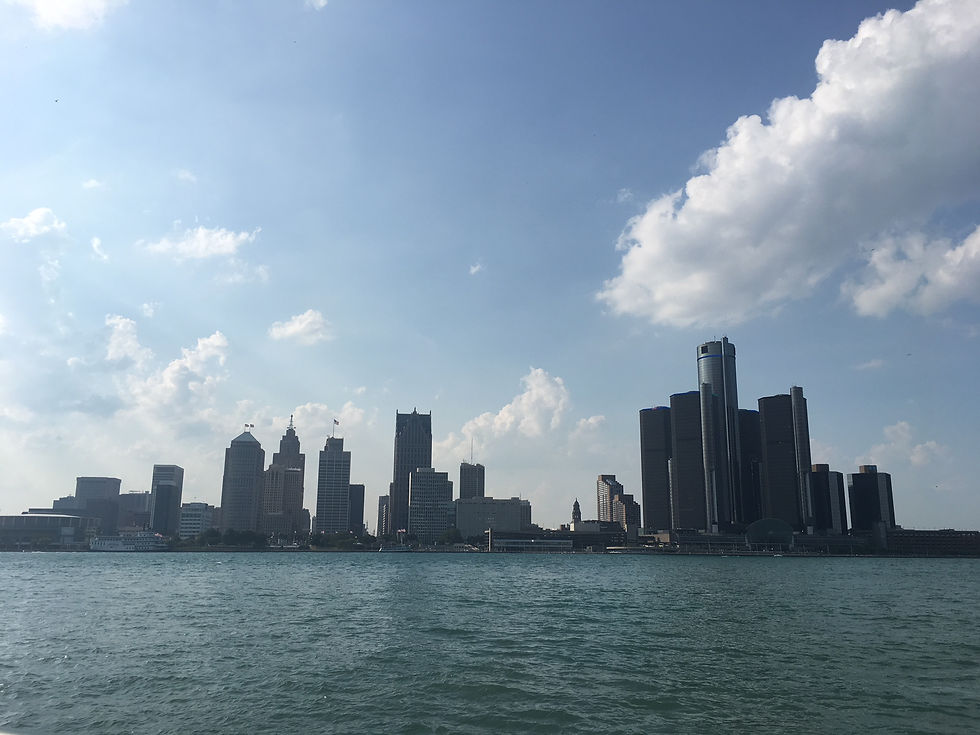
Detroit has its’ own special set of problems in her opinion, with people focusing on incredibly high unemployment, car insurance rates (the highest in the nation), school financing and standardized testing. Despite its many issues, it’s the place she has always called home, “innovation is always her, and I love that. We have a spirt that is hard to kill.” That spirit spills over into the discourse of the city and in her own life, “there’s always ground rules, I wanna hear you, but I want you to hear me too.” It has to go both ways for it to truly be discourse, there is too much ‘my way or the highway’ mentalities in the conversations she is a part of. “If you don’t talk to people, you’ll never be satisfied; things will never change—they’ll get worse, she says, “We have to understand each other’s differences and be on the journey with them. We don’t need to be blind to it.” Too often, we attempt to be color blind, and that only causes us to ignore the issues that separate and bring people together, in her opinion. More importantly, we cannot be blind to ourselves and our background, “you gotta know your path or you’’ be never able to change your future.” We talk for an hour or so like this, getting into issues of immigration, trafficking, and unemployment. She shares some of her beignets even though, “they’re no café du Monde.” She demands we hug and says, “this made my whole day,” as we head our separate way. I don’t think that has anything to do with me, although I am delightful. I think people are yearning to be heard right now. People are getting so filled with opinions and anxieties that they have to keep to themselves, that when someone asks what they think it just all comes out, like letting the air out of an overfilled balloon. That afternoon I decided to see just how easy it is to go to Canada. There are many a sign that read “tunnel to Canada” and I am so interested that I follow them right across the border. The customs agent is genuinely confused as to why I am alone, a Texan, in Detroit, in a Virginia plated Jeep, and only going to Canada for a few hours—a realize now that this is highly suspicious. Despite his concerns, I am let over with ease. Windsor, Canada is essentially just a Detroit suburb with a lower drinking age, which I think many would argue is its only attraction. “We don’t have much, but we have the view. In Detroit, you’re stuck looking at Windsor,” the bartender tells me at the spot I stop for an overpriced hamburger. She used to work in politics in Canada but found she made far more waiting tables than she did working for a member of parliament. I assure her that even at the Texas capital I made little more than $5 an hour. We bond over the shared struggle and chat for an hour or so. I drive around a bit, but there isn’t much to see. I pull off into a skinny parking lot on the waterfront that overlooks the Ambassador Bridge that connects the two countries. As the sun begins to set, I climb on top of the jeep and sit. I try to remove myself from all the uncertainty for a moment, from the interviews, from tweets, from the horrific images from our southern border—I try to be present. Free from this uncertainty, I watch the sun set over the United States and wonder for a moment when it will rise again.

Comments